The Minnesota Vikings didn’t just add an assistant offensive line coach this week — they may have quietly shifted how they’ll look at the draft board in April.
Head coach Kevin O’Connell bringing Derek Warehime onto the staff to work alongside new offensive line coach Keith Carter reads like a routine staffing note at first glance. But if you read between the lines, and if you care about how teams actually build, this is the kind of move that can change how prospects are graded, stacked, and ultimately selected.
Warehime’s background is rooted in college offensive line development and run-game structure. He’s spent years coaching linemen who weren’t finished products when they arrived but became functional, disciplined, low-sack units by the time they left. That matters more than fans realize. Coaching history often shapes draft behavior. When a staff is confident it can develop technique and footwork, it becomes more willing to draft traits over polish. When it isn’t, it sticks to safer, more “game-ready” players, even if the upside is lower.
Minnesota’s line struggles last season weren’t subtle. Protection breakdowns, missed time due to injuries, and one of the league’s worst sack rates forced the issue. This offseason already felt like a trench reset. Now it looks like a trench philosophy reset too.
What changes first is how mid-round linemen are viewed. In past cycles, teams without strong development infrastructure often pass on raw tackles, small-school blockers, or athletic projects who need hand placement and leverage work. With a college trench developer in the room, those same players start to look like clay instead of risk. A third-round tackle with elite feet but messy tape becomes a target instead of a fade. A guard with tackle traits becomes a conversion candidate instead of a tweener. The gray area prospects gain value.
That ripple effect stretches upward too. If a premier offensive tackle unexpectedly slides on draft night, and it happens every year, Minnesota is now better positioned to trust the upside pick. Draft rooms don’t just ask “Is he good enough today?” They ask “Can we finish him?” Coaching confidence changes that answer. A staff that believes it can refine pass sets, anchor technique, and combo timing is more willing to turn in the card when others hesitate.
There’s also a scheme tone here that shouldn’t be ignored. Coaches with Warehime’s background tend to value linemen who can think, move, and adapt within run structures, not just road graders. That points toward prospects with positional flexibility and movement skills getting stronger consideration. It also suggests tighter integration between tight end blocking roles and line calls, something O’Connell’s offense leans on heavily in play-action looks.
Put it all together and this hire feels less like a footnote and more like a draft tell. The Vikings appear to be building an environment where offensive line development is intentional, not hopeful. That usually leads to more swings on upside in the middle rounds and more conviction if a high-end tackle falls within striking distance early.
In SKOL Draft Room terms, don’t be surprised if Minnesota comes out of this draft with linemen that make casual fans say, “That feels early,” and line coaches say, “Just wait.” That’s often how real trench rebuilds start.
SKOL.
If Minnesota truly leans into its offensive line development reset, the draft board is going to favor moldable tackles with physical tools, positional flexibility, and technical upside, not just finished products. Three 2026 prospects who fit that lens particularly well are Max Iheanachor, Jude Bowry, and PJ Williams.

Max Iheanachor projects as the kind of tackle coaches love to develop because the movement skills show up immediately for a player with his size. He carries rare mass without looking heavy-footed, and his pass sets show range and recovery ability that can’t be taught. What still needs refinement is timing and strike consistency, which is exactly where a technique-driven NFL line room earns its keep. For a Vikings staff investing more heavily in trench coaching, he profiles as the type of upside tackle who could outperform his draft slot with proper hand and leverage work.

Jude Bowry brings a more aggressive, reactive protection style that flashes high ceiling but still needs structural polish. His tape shows strong competitive reps and the ability to widen rush paths, but also moments where balance and pad level drift. That combination, visible pass-pro tools paired with correctable mechanics, often draws development staffs in rather than pushing them away. In a room that values coachability and functional athleticism, Bowry looks like a prospect who could be viewed as ascending rather than risky.

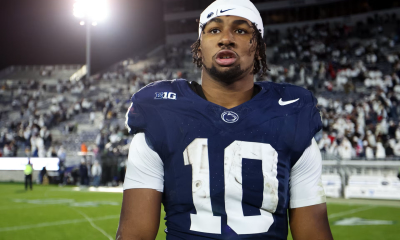
PJ Williams fits the versatility profile that modern offensive systems increasingly prioritize. He’s shown the ability to line up at multiple spots and wins with foot quickness and body control more than brute force. His anchor and hand placement need technical layering, but the movement foundation is there. That makes him especially attractive for a staff that wants flexible depth with starter upside after a year or two in an NFL strength and technique program.
If this is truly a new chapter in how Minnesota builds up front, don’t just watch the top of the tackle board. Watch the traits tackles, the ones coaches believe they can finish. That’s where draft value, and long-term protection, is usually found.
SKOL.